

Black Musli – A Traditional Root for Strength, Vitality & Holistic Wellness
1. What Is Black Musli?
Black Musli is a traditional herbal root that has been valued in Indian households and forest-based cultures for generations. Unlike common culinary herbs, Black Musli is known for its dark, fibrous tubers, which grow underground and develop slowly over time. This slow growth is one of the reasons the root has historically been considered precious and worthy of careful handling.
In traditional practices, Black Musli was never treated as an everyday kitchen ingredient. Instead, it was respected as a strength-oriented nourishment herb, often used during phases of life that required additional physical resilience, stamina, or recovery. The root’s dark color and dense texture symbolized depth, endurance, and inner strength in traditional understanding.
At Paryagat, Black Musli is cultivated with attention to soil quality, moisture balance, and plant maturity. The goal is not rapid harvesting, but allowing the root to reach its natural potential before processing. This careful approach ensures that the final powder reflects the true character of Black Musli, not a diluted or rushed version.
If you are looking for authentic, farm-grown Black Musli prepared with traditional care, you can explore it here:
👉BUY NOW
2. Active Molecules in Black Musli (Educational & Natural Overview)
Black Musli naturally contains a variety of plant-origin compounds that develop as the root matures in the soil. These compounds are part of the plant’s natural structure and are not artificially introduced or enhanced. Traditional usage of Black Musli always relied on the whole root, not isolated extracts.
Some naturally occurring components discussed in botanical and traditional literature include:
-
Natural saponins
-
Plant sterol-like compounds
-
Fiber-rich root matter
-
Polysaccharides
-
Naturally occurring antioxidants
In traditional understanding, these natural components are associated with nourishment, endurance, and long-term balance, rather than immediate effects. This is why Black Musli has historically been used with patience and consistency.
Paryagat follows a low-intervention processing philosophy, meaning:
-
No chemical extraction
-
No artificial concentration
-
No synthetic enhancement
This ensures that Black Musli remains close to its original, traditionally respected form.
3. Why Choose Paryagat Black Musli?
The quality of Black Musli depends greatly on how it is grown, harvested, and processed. Many products available in the market differ significantly in purity and authenticity.
Farm-Controlled Cultivation
Paryagat grows Black Musli under monitored agricultural conditions rather than sourcing from unknown forest collections or bulk traders. This ensures traceability and consistency.
Chemical-Free Farming Practices
No synthetic fertilizers, pesticides, or growth accelerators are used. This is especially important for a root that is consumed internally.
Root-Only Selection
Only mature Black Musli tubers are selected. No stems, fillers, or unrelated plant material are added.
Gentle Drying & Grinding
Roots are:
-
Cleaned carefully
-
Shade-dried slowly
-
Ground under controlled temperature conditions
This preserves natural texture, aroma, and integrity.
Clean & Honest Packaging
No artificial colors, preservatives, or bulking agents are added.
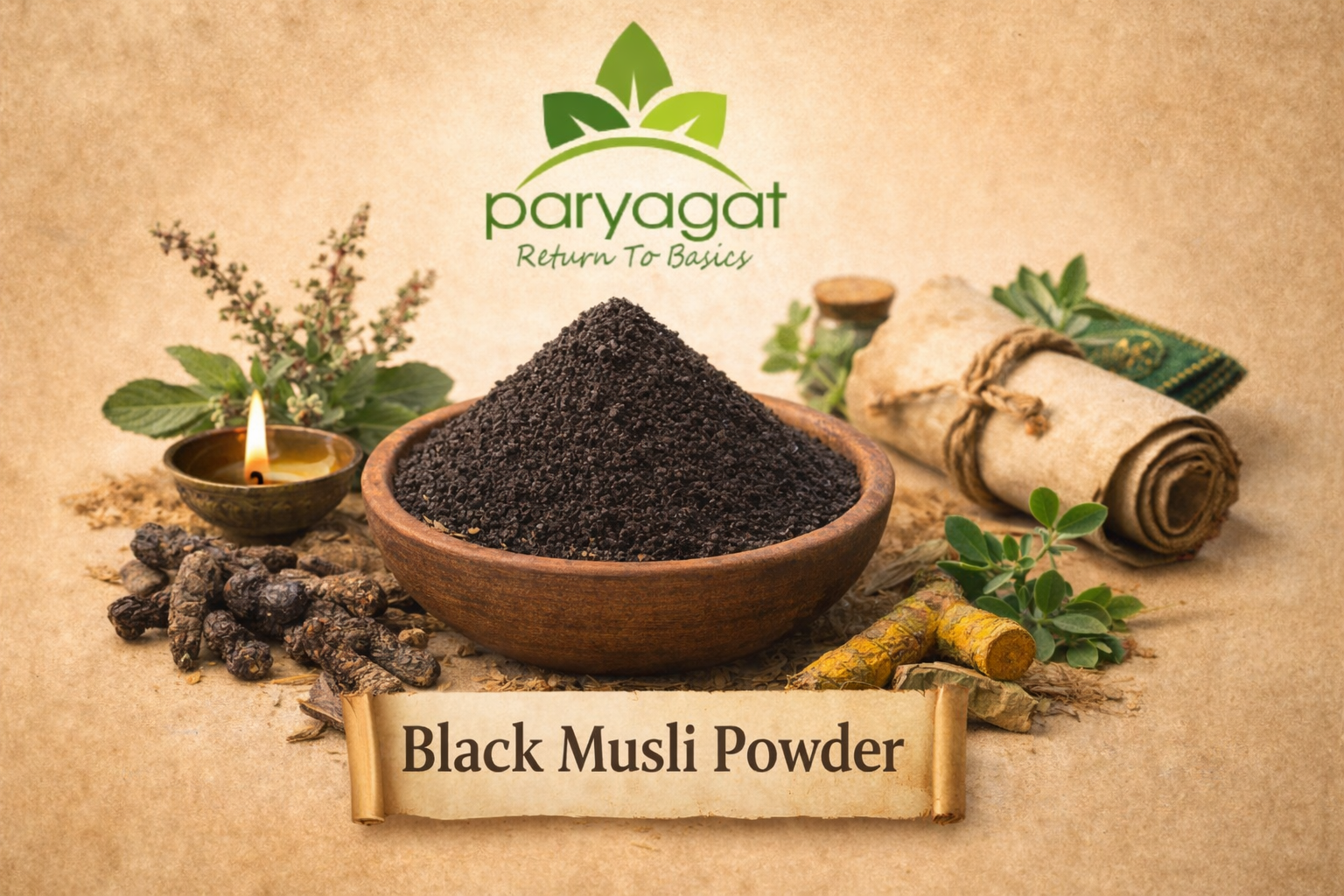
To choose Black Musli that respects traditional values and modern purity standards, visit:
👉 BUY NOW
4. Ancient History of Black Musli in Traditional Practices
Black Musli has a long history rooted in forest-based traditions and ancient Indian knowledge systems. Historically, it was harvested by skilled collectors who understood the importance of plant maturity and sustainable harvesting.
In earlier times:
-
Black Musli was gathered only after full root development
-
Roots were dried and stored for extended periods
-
Usage was seasonal or phase-specific
-
Consumption emphasized moderation and discipline
Black Musli was often associated with individuals engaged in physically demanding work, such as farmers, laborers, and warriors. Elders believed the root supported endurance and inner strength when used patiently and respectfully.
This historical context explains why Black Musli continues to be regarded as a premium herbal root rather than a common supplement.
5. Health & Lifestyle Benefits of Black Musli
(Traditional & Policy-Safe Context)
⚠️ Important: The following benefits are described in traditional, lifestyle, and wellness context only, not as medical treatment or cure.
Benefits as per Age
Young Adults
Traditionally included in routines focused on physical strength, stamina, and recovery.
Middle-Aged Individuals
Used in disciplined routines aimed at maintaining vitality and consistency.
Elderly
Included gently as part of long-term nourishment practices.
Benefits as per Gender
For Men
Black Musli has historically been associated with strength-oriented and vitality-focused routines.
For Women
Used as part of balanced nourishment practices emphasizing endurance and internal support.
Lifestyle & Wellness Focus Areas
Physical Strength & Stamina
Black Musli is traditionally linked with routines that emphasize endurance and sustained physical effort.
Sexual Health & Vitality (Traditional Context)
Historically associated with vitality-focused lifestyles and overall body nourishment, not as a targeted solution.
Muscle Recovery & Endurance
Included in routines followed by individuals engaged in physically demanding activities.
Bone Strength & Structural Support
Traditionally combined with mineral-rich foods to support skeletal strength.
Energy-Supporting Lifestyle
Used in routines designed to maintain steady energy rather than sudden stimulation.
Mental Resilience & Focus
Included in holistic wellness practices emphasizing discipline and consistency.
Heart-Friendly Lifestyle
Associated with calm, structured daily routines.
Immunity-Supporting Lifestyle
Used seasonally as part of strengthening routines.
Kidney & Liver Wellness Practices
Included gently in cleansing-oriented diets (not a treatment).
Diabetes-Conscious Lifestyle
Traditionally used in disciplined food routines, not as a medical solution.
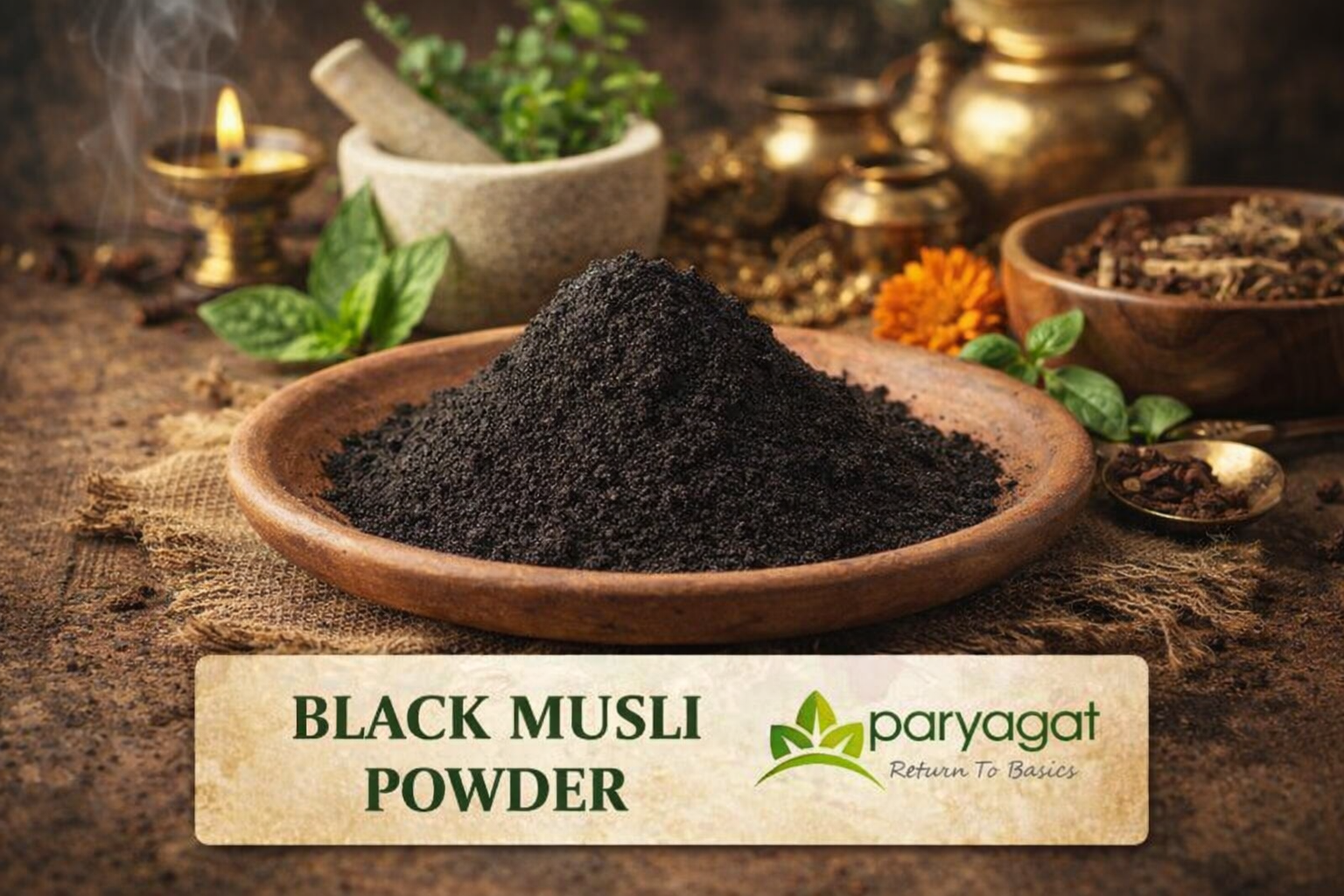
To include Black Musli in your daily wellness routine, explore:
👉 BUY NOW
6. Frequently Asked Questions (FAQs)
1. Is Black Musli a medicine?
No. It is a traditional herbal root used in lifestyle and nourishment routines.
2. Can Black Musli be used daily?
Traditionally, yes, when used consistently and in moderation.
3. Which part of the plant is used?
Only the root (tuber).
4. Is Paryagat Black Musli natural?
Yes. It is farm-grown and chemical-free.
5. Does it contain additives or preservatives?
No artificial additives or preservatives are added.
6. How is Black Musli traditionally consumed?
Mixed with milk, water, or included in traditional blends.
7. Where can I buy authentic Black Musli Powder?
👉 BUY NOW
Conclusion
Black Musli is a heritage root that represents endurance, nourishment, and disciplined living. Its traditional value lies not in instant outcomes, but in long-term consistency and balance. When cultivated responsibly and used thoughtfully, Black Musli becomes a meaningful part of holistic wellness routines.
Paryagat’s Black Musli stands apart because it is:
-
Farm-grown
-
Root-focused
-
Chemical-free
-
Traditionally processed
If you are looking for authentic Black Musli Powder that respects ancient wisdom and modern purity standards, this is a trusted choice:
👉BUY NOW
Add comment
You must be logged in to post a comment.