
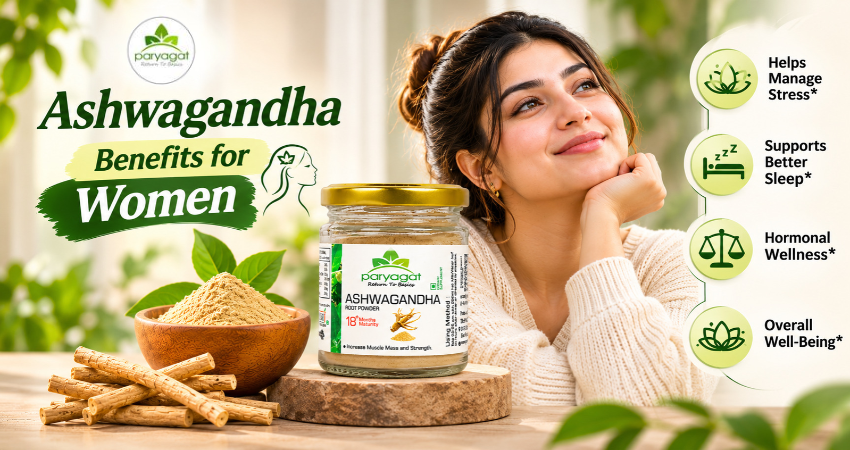
Ashwagandha Benefits for Women: Uses, Research & Safety
Introduction: Understanding Ashwagandha and Women’s Wellness
Women’s wellness involves several interconnected aspects of health, including emotional well-being, sleep, reproductive health, hormonal changes, nutrition, and everyday lifestyle habits.
In recent years, traditional herbs have attracted growing attention as people explore different approaches to understanding overall wellness. One of the most recognised herbs in this category is Ashwagandha (Withania somnifera), a plant with a long history in traditional Ayurvedic practices.
Also known as Indian Ginseng or Winter Cherry, Ashwagandha has traditionally been associated with vitality, resilience, and general well-being.
Modern scientific research has investigated its naturally occurring compounds, particularly withanolides, and explored possible relationships with stress and sleep.
But what does Ashwagandha actually offer women? Can it support relaxation? What does research say about hormonal health and menopause? Are all Ashwagandha preparations equally effective?
This detailed guide explores the potential Ashwagandha benefits for women, its traditional background, current scientific evidence, and important safety considerations.
At Paryagat – Return To Basics, we believe traditional herbal knowledge should be explored alongside responsible scientific information.
1. What Is Ashwagandha?
Ashwagandha is a small evergreen shrub belonging to the Solanaceae family. Its botanical name is Withania somnifera.
The plant is native to parts of India, the Middle East, and Africa. Its root has been used in traditional Ayurvedic preparations for generations.
Ashwagandha is commonly associated with traditional wellness practices involving vitality, resilience, and balance.
Important naturally occurring compounds
Ashwagandha contains several plant compounds, including:
Withanolides: These are naturally occurring steroidal lactones that have attracted scientific interest because of their biological activities.
Alkaloids: These are naturally occurring nitrogen-containing plant compounds found in different parts of the plant.
Other phytochemicals: The plant contains additional constituents that contribute to its chemical composition.
The amount and composition of these compounds can vary depending on the plant part, cultivation conditions, extraction process, and product preparation.
This distinction matters because traditional root powder and standardised root extracts are not interchangeable. Research findings from a particular extract cannot automatically be applied to every Ashwagandha powder.
2. Ashwagandha and Stress Management: An Important Area of Research
One of the most researched potential benefits of Ashwagandha is its relationship with stress.
Modern lifestyles can involve demanding work schedules, family responsibilities, academic pressure, and limited opportunities for rest.
Stress is a normal response to challenging situations, but prolonged stress can affect sleep, concentration, mood, and general well-being.
What does traditional Ayurveda say?
In Ayurveda, Ashwagandha is traditionally classified among herbs associated with strength, vitality, and resilience.
It has historically been included in preparations intended to support general wellness.
What does modern research suggest?
Several small clinical trials have investigated Ashwagandha extracts in relation to perceived stress and cortisol, a hormone involved in the body’s stress response.
Some studies have reported reductions in perceived stress and cortisol levels among participants taking particular Ashwagandha preparations.
However, research findings vary, and many studies have involved relatively small groups and short observation periods.
The National Institutes of Health’s Office of Dietary Supplements notes that some Ashwagandha preparations may help with stress, although the evidence is not sufficient to establish broad therapeutic claims.
What this means for women: Stress management is an important part of overall wellness, and Ashwagandha is an interesting subject of research. However, it should not be presented as a guaranteed solution for stress, anxiety, or emotional difficulties.
3. Ashwagandha and Sleep Quality
Sleep plays an essential role in physical and emotional well-being.
Adequate sleep supports normal cognitive function, daily energy, emotional regulation, and general health.
Some women experience changes in their sleep patterns during particularly stressful periods or different stages of life.
Why is Ashwagandha being studied for sleep?
Researchers have investigated whether certain Ashwagandha extracts may influence sleep quality and sleep duration.
Some clinical trials have reported improvements in sleep-related measurements among participants.
Possible areas being investigated include:
- Overall sleep quality.
- Time taken to fall asleep.
- Sleep efficiency.
- General sleep-related well-being.
However, the available studies have used different extracts, preparations, and research methods.
The evidence is promising in some areas but remains limited.
Important: Ashwagandha is not a proven treatment for insomnia or other sleep disorders. Persistent sleep difficulties should be discussed with a qualified healthcare professional.
4. Ashwagandha and Women’s Hormonal Health
Hormones are chemical messengers that influence several important processes in the body.
In women, hormones such as oestrogen, progesterone, and thyroid hormones play roles in reproductive health, menstrual cycles, metabolism, and other bodily functions.
Because Ashwagandha has been investigated for its relationship with stress-related hormones, researchers have also explored its potential effects on hormonal pathways.
Understanding the research
A 2026 systematic review and meta-analysis examined randomised controlled trials investigating Ashwagandha and hormone levels in adults.
The review reported changes in certain hormonal measurements, including cortisol. It did not find a significant increase in testosterone among women in the included analysis.
However, this does not establish Ashwagandha as a treatment for hormonal imbalance.
Does Ashwagandha balance female hormones?
There is currently insufficient evidence to claim that Ashwagandha reliably balances female hormones or corrects hormonal disorders.
Hormonal changes can have different causes, and appropriate evaluation depends on individual symptoms and medical history.
Ashwagandha should not replace medical assessment or prescribed treatment for hormonal conditions.
5. Ashwagandha and Menopause: What Should Women Know?
Menopause is a natural stage of life that marks the end of menstrual periods.
It is associated with changes in reproductive hormone levels and can involve different experiences, such as:
- Hot flashes.
- Night sweats.
- Changes in sleep patterns.
- Mood changes.
- Vaginal and urinary symptoms.
Researchers have investigated whether Ashwagandha root extracts may have a role in understanding certain menopause-related experiences.
What does the research suggest?
A clinical trial involving 60 women aged 45–55 examined a particular Ashwagandha root extract over 56 days.
The researchers reported improvements in several menopause-related measurements compared with the placebo group.
Although these findings are interesting, the study was relatively small and investigated a specific root extract.
Its findings cannot automatically be applied to all Ashwagandha products, including ordinary root powder.
More independent research involving larger groups and longer follow-up periods is needed.
Important: Ashwagandha is not an established treatment for menopause, hot flashes, or hormonal conditions. Women experiencing significant menopausal symptoms should consult a qualified healthcare professional.
6. Ashwagandha and Women’s Reproductive Health
Reproductive health is an important part of women’s overall well-being.
It involves several interconnected factors, including menstrual health, hormonal function, reproductive anatomy, nutrition, and general health.
Ashwagandha has attracted research interest because of its potential relationship with stress and endocrine pathways.
However, it is important to distinguish scientific investigation from proven reproductive benefits.
What about female fertility?
There is not enough high-quality evidence to establish Ashwagandha as an effective treatment for female infertility.
It should not be promoted as a fertility enhancer or a solution for reproductive disorders.
What about PCOS?
Polycystic Ovary Syndrome (PCOS) is a complex hormonal and metabolic condition.
There is insufficient clinical evidence to establish Ashwagandha as a treatment for PCOS or to claim that it restores ovulation or regulates menstrual cycles.
Women with PCOS should seek individualised medical guidance.
Pregnancy and breastfeeding precautions
Ashwagandha should be avoided during pregnancy and should not be used while breastfeeding, according to the National Center for Complementary and Integrative Health.
Women planning pregnancy should discuss any herbal supplement with a qualified healthcare professional before considering it.
7. Understanding Ashwagandha Root Powder and Its Difference From Extracts
Ashwagandha is available in different product forms, and understanding these differences is important when evaluating research claims.
Ashwagandha root powder
Root powder is produced by drying and processing the plant’s roots.
It represents the powdered plant material and may contain naturally occurring plant constituents.
Its composition can vary depending on sourcing, processing, and quality standards.
Standardised Ashwagandha extract
An extract is produced through a process that concentrates selected constituents from the plant material.
Some extracts are standardised to contain a specified amount of withanolides.
These preparations are frequently used in clinical research.
Why is this difference important?
A study involving a standardised extract does not automatically prove that an ordinary root powder produces the same results.
The preparation, concentration, quality, and research conditions all matter.
When reading about Ashwagandha benefits, always check which plant part and preparation were investigated.
8. Safety and Precautions: What Women Should Know
Natural ingredients are not automatically suitable for everyone.
Although Ashwagandha has been investigated in several clinical studies, important safety considerations remain.
Pregnancy and breastfeeding
Ashwagandha should be avoided during pregnancy and breastfeeding.
Thyroid conditions
Ashwagandha may affect thyroid function and may interact with thyroid medications.
People with thyroid disorders should seek medical advice before considering it.
Liver health
Although uncommon, cases of liver injury have been associated with Ashwagandha supplements.
Seek medical attention if you experience concerning symptoms after taking a herbal supplement.
Medication interactions
Ashwagandha may interact with certain medicines, including:
- Medicines for high blood pressure.
- Medicines for diabetes.
- Thyroid medications.
- Sedatives.
- Immunosuppressant medicines.
- Certain anti-seizure medications.
Possible side effects
Reported side effects include:
- Stomach discomfort.
- Nausea.
- Loose stools.
- Drowsiness.
- Vomiting.
Long-term safety has not been established.
People with existing health conditions, those taking medicines, and anyone considering a herbal supplement should consult a qualified healthcare professional first.
9. Healthy Lifestyle Habits That Support Women’s Wellness
Ashwagandha is only one traditional herb among many, and no single ingredient can replace the foundations of good health.
A balanced lifestyle remains important throughout different stages of life.
Maintain balanced nutrition
Include a variety of vegetables, fruits, whole grains, protein-rich foods, and healthy fats in everyday meals.
Prioritise sleep
Maintain a consistent sleep routine and create a comfortable sleeping environment.
Stay physically active
Regular, age-appropriate physical activity supports cardiovascular health, strength, mobility, and emotional well-being.
Manage everyday stress
Relaxation activities, hobbies, social support, and appropriate professional guidance can contribute to emotional wellness.
Attend regular health check-ups
Regular medical consultations can help identify and address health concerns at an appropriate stage.
Why Choose Paryagat – Return To Basics?
At Paryagat – Return To Basics, we appreciate India’s traditional herbal heritage and the importance of informed wellness choices.
Our approach is centred on ingredient awareness, responsible product information, and respect for traditional knowledge.
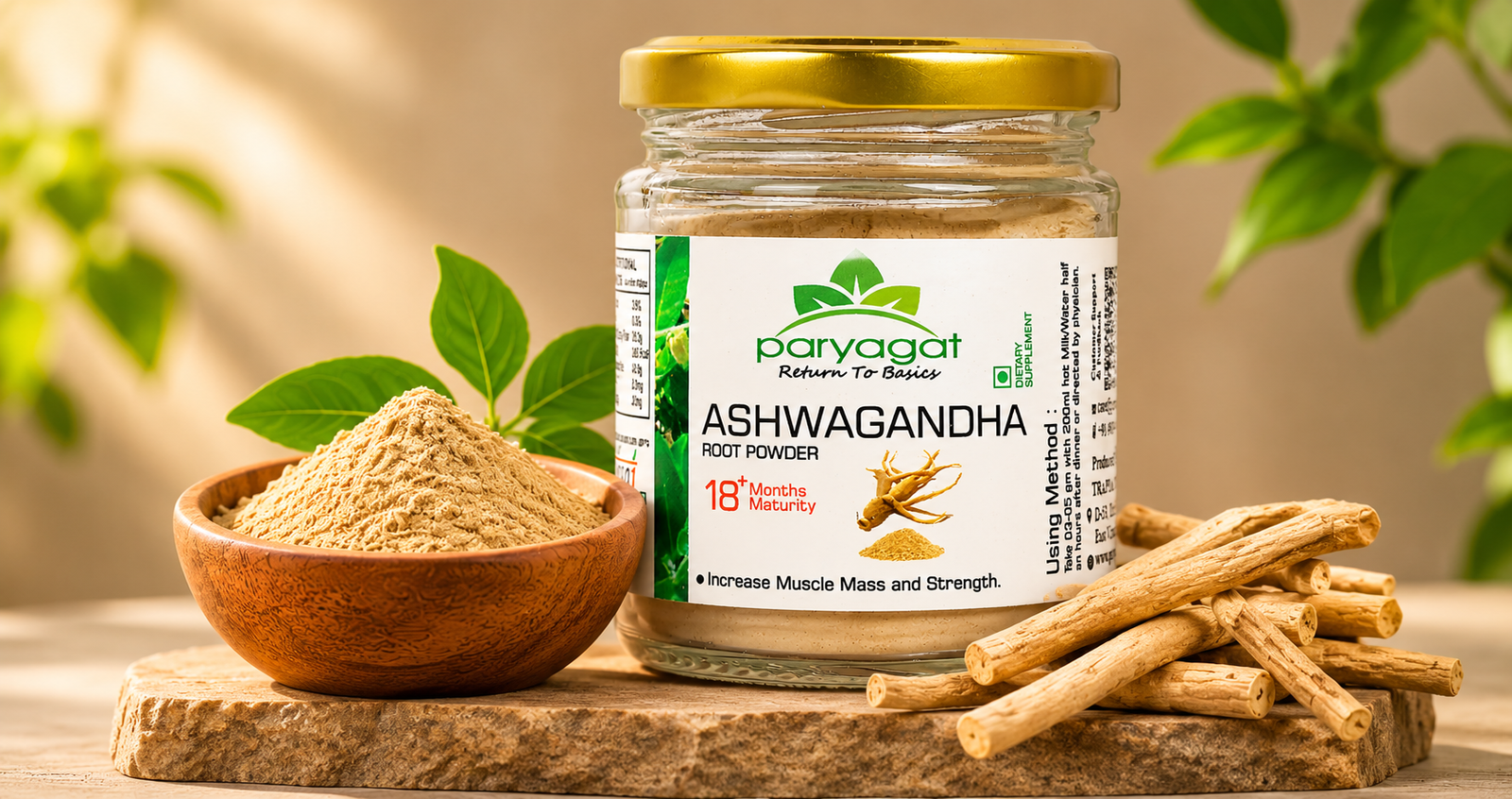
Paryagat Ashwagandha Root Powder is part of our herbal product collection.
When exploring any herbal product, customers should consider:
- Clear botanical identification.
- Transparent ingredient information.
- Appropriate quality and safety information.
- Clear product labelling.
- Responsible health and wellness claims.
We believe that understanding an ingredient is just as important as discovering its traditional history.
Explore Paryagat Ashwagandha Root Powder and discover the heritage of traditional Indian herbs.
10. Common Myths About Ashwagandha for Women
Myth 1: Ashwagandha balances all female hormones.
Fact: There is insufficient evidence to establish that Ashwagandha corrects hormonal imbalances or treats hormonal disorders.
Myth 2: Ashwagandha improves fertility in every woman.
Fact: Human evidence is insufficient to establish Ashwagandha as a treatment for female infertility.
Myth 3: Ashwagandha is a proven menopause treatment.
Fact: Some early research has investigated menopause-related outcomes, but more evidence is needed before it can be considered an established treatment.
Myth 4: Natural herbs have no side effects.
Fact: Ashwagandha can cause side effects and may interact with medicines. Rare cases of liver injury have also been reported.
Myth 5: All Ashwagandha products offer identical benefits.
Fact: Root powders, root extracts, and root-and-leaf extracts can differ in composition. Results from one preparation cannot automatically be applied to another.
11. Frequently Asked Questions About Ashwagandha Benefits for Women
1. What are the potential Ashwagandha benefits for women?
Ashwagandha has been investigated for its potential relationship with stress and sleep. However, research is still developing, and results from specific extracts should not be assumed to apply to every product.
2. Can Ashwagandha help women manage stress?
Some clinical studies suggest that particular Ashwagandha preparations may reduce perceived stress. However, the evidence is limited and does not establish Ashwagandha as a treatment for anxiety or stress-related disorders.
3. Does Ashwagandha support better sleep?
Some studies have reported improvements in sleep quality among participants using specific Ashwagandha extracts. More research is needed to establish the extent and consistency of these effects.
4. Does Ashwagandha balance female hormones?
There is not enough evidence to establish that Ashwagandha reliably balances female hormones or treats hormonal disorders.
5. Is Ashwagandha beneficial during menopause?
A small clinical trial has investigated a specific Ashwagandha root extract in menopausal women and reported improvements in some measurements. More research is needed before drawing broad conclusions.
6. Can Ashwagandha improve female fertility?
There is insufficient high-quality clinical evidence to establish Ashwagandha as a fertility treatment for women.
7. Can women use Ashwagandha during pregnancy?
No. Ashwagandha should be avoided during pregnancy and breastfeeding.
8. Is Ashwagandha root powder the same as Ashwagandha extract?
No. Root powder is processed dried root material, whereas an extract is produced through an extraction process. Their composition and concentrations can differ.
9. Can Ashwagandha interact with medicines?
Yes. It may interact with thyroid, blood pressure, diabetes, sedative, immunosuppressant, and certain other medicines.
10. Is long-term Ashwagandha use proven safe?
No. Available safety information is mainly based on short-term studies. Long-term safety has not been established.
Conclusion: Exploring Ashwagandha and Women’s Wellness Responsibly
Ashwagandha (Withania somnifera) has an important place in traditional Ayurvedic practices and continues to attract scientific interest.
Research has explored its possible relationship with stress and sleep, while early studies have investigated certain aspects of hormonal and menopausal health.
However, the strength of evidence varies considerably between these areas. Claims about fertility, PCOS, hormone balance, and guaranteed menopause relief are not established.
It is equally important to understand its precautions, potential medication interactions, and the differences between root powder and standardised extracts.
At Paryagat – Return To Basics, we believe that traditional herbal knowledge should go hand in hand with responsible scientific understanding.
Explore the heritage of Ashwagandha, make informed wellness choices, and remember that individual health needs deserve professional guidance.
Paryagat – Return To Basics. Celebrate Nature, Choose Informed Wellness.

Add comment
You must be logged in to post a comment.