Ash Gourd Seeds: Nutritional Benefits, Uses & Protein
1. Introduction: Getting to Know Ash Gourd Seeds
Ash gourd, scientifically known as Benincasa hispida, is also called winter melon, wax gourd or white pumpkin. It is a familiar ingredient in many Asian cuisines and is used in a variety of traditional food preparations.
While the fruit is commonly used in cooking, its seeds are often overlooked. These seeds have their own nutritional value and are attracting interest as a potential ingredient in functional foods.
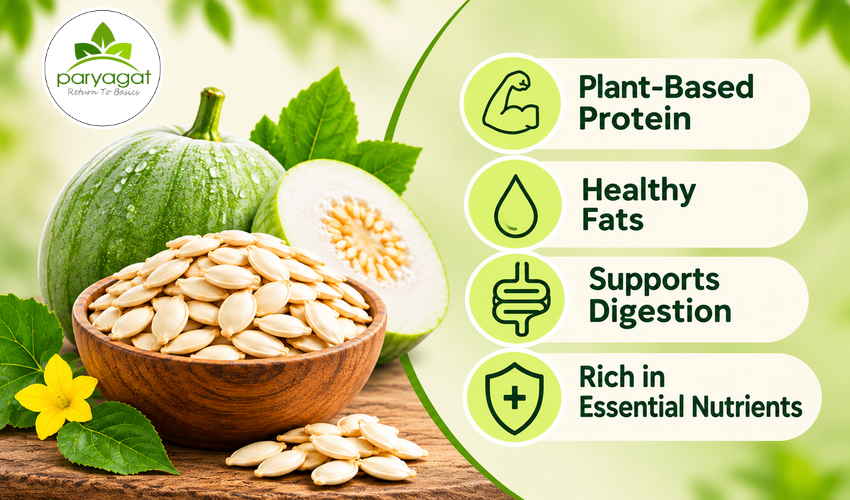
One particularly interesting feature is their plant-based protein and natural oil content. A food-composition study published in 2018 reported approximately 24.8% protein and 40.27% crude fat in the analysed ash gourd seed sample. These figures are specific to that study and can vary with seed variety, growing conditions and processing.
This makes ash gourd seeds an interesting ingredient for people exploring a varied, plant-based diet.
2. What Are Ash Gourd Seeds?
Ash gourd seeds come from the mature fruit of the ash gourd plant, a member of the Cucurbitaceae family, which also includes pumpkin, cucumber and watermelon.
The seeds are generally flat and oval-shaped, with a firm outer covering. Once properly cleaned and processed, they can be used in different food preparations.
Botanical information:
| Detail | Information |
|---|---|
| Common name | Ash Gourd |
| Botanical name | Benincasa hispida |
| Family | Cucurbitaceae |
| Plant part | Seeds |
| Other names | Winter Melon, Wax Gourd, White Pumpkin |
3. Special Nutritional Benefit: A Source of Plant-Based Protein
The standout nutritional feature of ash gourd seeds is their protein content.
Protein is an essential nutrient that helps the body build and maintain tissues and supports many normal body functions. Plant-based foods such as legumes, nuts and seeds can contribute to daily protein intake.
Research into ash gourd seeds has identified protein as one of their important nutritional components. The 2018 food research study reported 24.8% protein in its analysed sample.
Why is plant-based protein important?
-
Contributes to normal growth and tissue maintenance.
-
Provides amino acids needed for everyday body functions.
-
Helps add variety to a plant-based eating pattern.
-
Can complement protein sources such as lentils, beans, nuts and other seeds.
Ash gourd seeds should be considered one possible food ingredient, not a complete replacement for a balanced diet or other protein sources.
👉🏻BUY ASH Gourd Seeds👈🏻
4. Other Nutritional Features of Ash Gourd Seeds
Beyond protein, research has explored several other components of these seeds.
4.1 Natural Fat Content
Ash gourd seeds contain naturally occurring oils. Research has identified linoleic acid among the fatty acids present in ash gourd seed oil. Linoleic acid is an essential omega-6 fatty acid that the body needs from food.
4.2 Dietary Fibre
Ash gourd seed samples have also been analysed for fibre. Fibre is an important part of a varied diet and contributes to normal digestive function. The amount in a serving depends on the product and how it is processed.
4.3 Naturally Occurring Plant Compounds
Researchers have investigated different phytochemicals and bioactive compounds in ash gourd seeds. These findings are of scientific interest, but laboratory research does not automatically establish a health benefit in people.
4.4 A Useful Food Ingredient
Ash gourd seeds are also being studied for their potential use in food products. Research has explored their incorporation into food formulations, including seed-enriched chocolate preparations.
5. How Can Ash Gourd Seeds Be Included in Food?
Ash gourd seeds can be explored as a food ingredient in different preparations, depending on whether they are sold whole, dried or powdered.
-
Seed powder: Can be incorporated into selected food recipes.
-
Smoothies: A suitable food-grade seed powder may be added to a smoothie.
-
Traditional recipes: Seeds can be explored in regional food preparations.
-
Mixed seed preparations: They can be combined with other edible seeds as part of a varied diet.
Always use properly processed, food-grade seeds and follow the product’s preparation instructions.
👉🏻BUY ASH Gourd Seeds👈🏻
6. Why Choose Paryagat?
At Paryagat, our approach is inspired by traditional ingredients and a return to natural roots.
We believe that understanding an ingredient is an important part of making informed food choices. Ash gourd seeds are an interesting example of how commonly overlooked plant parts can have nutritional and food-use potential.
When choosing an ash gourd seed product, look for:
-
Clear ingredient information.
-
Proper packaging and storage instructions.
-
A clearly stated net weight.
-
Transparent product information.
-
Appropriate quality and food-safety details.
Paryagat — Return To Basics.
7. Ash Gourd Seeds: Frequently Asked Questions
Q1. What are ash gourd seeds?
Ash gourd seeds are the edible seeds found inside the fruit of Benincasa hispida, also known as winter melon or wax gourd.
Q2. What is the special nutritional feature of ash gourd seeds?
Their notable nutritional feature is their plant-based protein content. Research has also identified naturally occurring fats and other food components.
Q3. Do ash gourd seeds contain protein?
Yes. A 2018 study reported 24.8% protein in the analysed seed sample. The actual amount can vary depending on the seeds and processing.
Q4. Do ash gourd seeds contain healthy fats?
They contain naturally occurring oils, including fatty acids such as linoleic acid. Their nutritional contribution depends on the quantity consumed.
Q5. Can ash gourd seeds be used in cooking?
Food-grade, properly processed seeds may be incorporated into suitable recipes, depending on their form and product instructions.
Q6. Are ash gourd seeds the same as pumpkin seeds?
No. Both come from plants in the Cucurbitaceae family, but ash gourd and pumpkin are different plants with different botanical identities.
Q7. Can ash gourd seeds replace other protein foods?
No. They can contribute to dietary variety, but a balanced diet should include different protein sources such as pulses, beans, dairy or other suitable foods.
Q8. Are the health benefits of ash gourd seeds scientifically proven?
Their nutritional composition has been studied, but many proposed medicinal effects are based on laboratory or preliminary research. More human studies are needed before specific health claims can be established.
👉🏻BUY ASH Gourd Seeds👈🏻
8. Common Myths About Ash Gourd Seeds
Myth 1: Ash gourd seeds are useless food waste.
Fact: Research has identified protein, natural oils and other nutritional components in these seeds.
Myth 2: Ash gourd seeds contain only fat.
Fact: They contain multiple components, including protein, carbohydrates and fibre. Their composition varies by sample.
Myth 3: Ash gourd seeds are exactly the same as pumpkin seeds.
Fact: They come from different plant species and should not be treated as nutritionally identical.
Myth 4: Eating ash gourd seeds can cure diseases.
Fact: Nutritional value does not establish that a food can treat or cure a medical condition.
Myth 5: More ash gourd seed powder means better results.
Fact: Eating larger quantities does not guarantee additional benefits. Follow food-product instructions and maintain a varied diet.
👉🏻BUY ASH Gourd Seeds👈🏻
9. Precautions and Food-Safety Considerations
Ash gourd seeds should be treated as a food ingredient rather than a medicine.
-
Choose clean, properly processed, food-grade seeds.
-
Follow the product’s storage and preparation instructions.
-
Avoid consuming seeds if you have a known allergy to them.
-
Introduce unfamiliar foods in ordinary food portions.
-
Do not use seed powder as a substitute for medical treatment or a balanced diet.
People with food allergies or special dietary requirements should seek appropriate professional advice before trying unfamiliar seed products.
👉🏻BUY ASH Gourd Seeds👈🏻
10. Conclusion: Appreciating the Nutritional Value of Ash Gourd Seeds
Ash gourd seeds are more than a commonly discarded part of a vegetable. Their protein, naturally occurring oils and other nutritional components make them an interesting subject for food and nutrition research.
Their most notable feature is their potential contribution of plant-based protein to a varied diet. Although further research is needed to establish specific health effects, they offer an example of how traditional ingredients can be explored through modern nutritional science.
At Paryagat, we celebrate the value of natural ingredients and the knowledge behind them.
Add comment
You must be logged in to post a comment.